Amasia
Description & Features
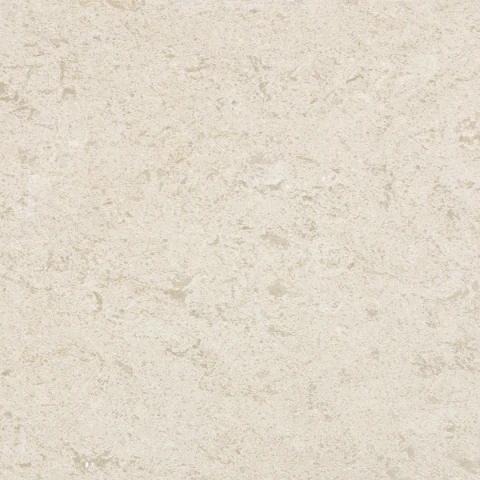
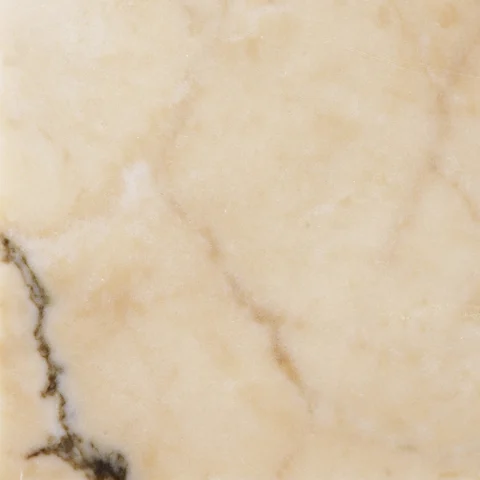
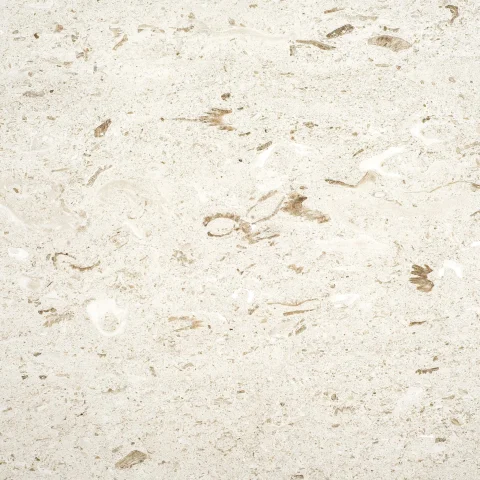
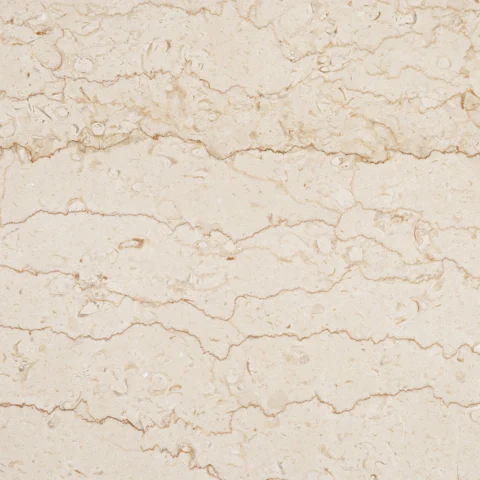
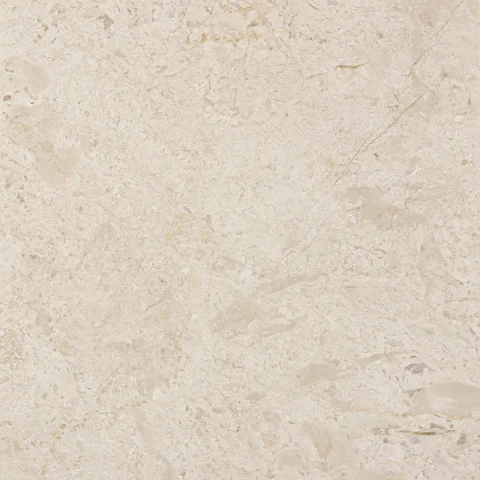
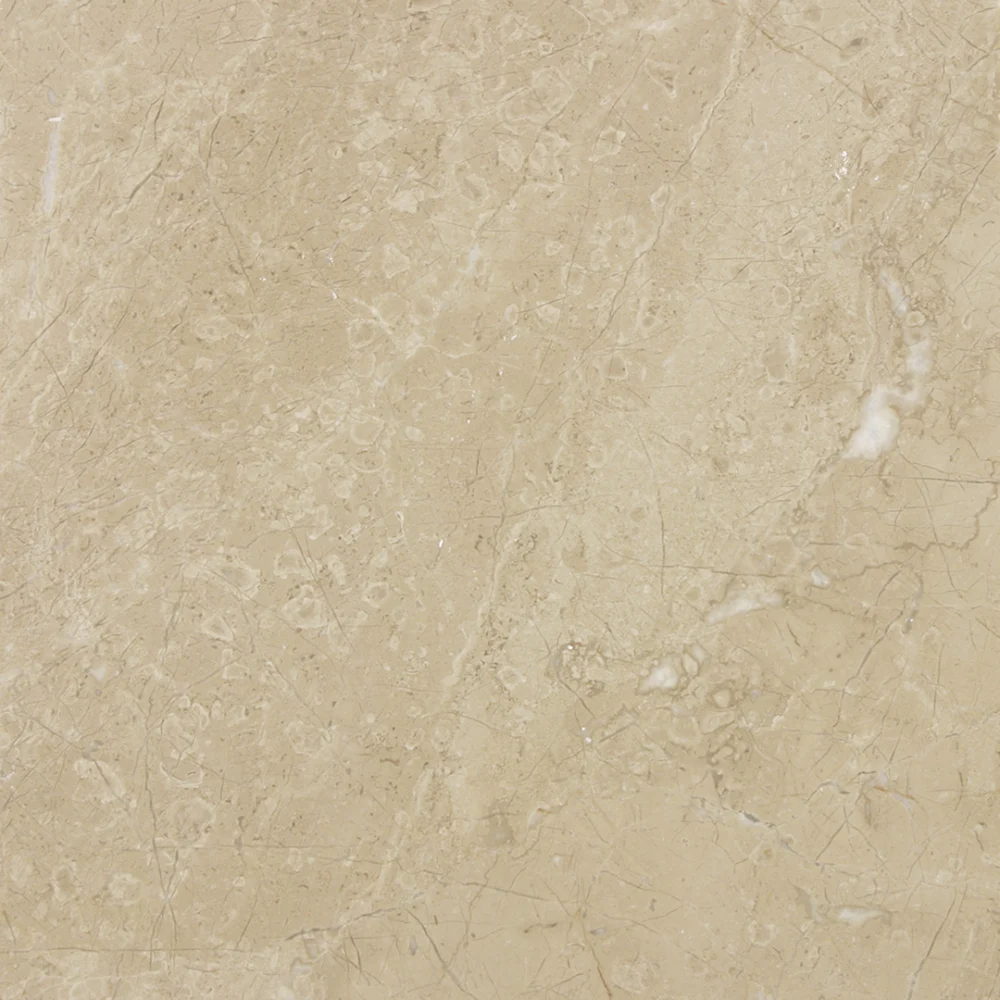
Amasia takes its name from Amasya, the historic city of northern Turkey, and corresponds to Amasya Bej (Amasya Beige), one of the most recognised beige stones of the country. Since 2018 it has been registered with the Turkish Patent and Trademark Office (TÜRKPATENT) as the designation of origin “Amasya Beji Mermeri”, with a production area that covers villages in the Merkez and Göynücek districts of Amasya and in Zile, in the neighbouring province of Tokat. Geologically it is a limestone of the Doğdu Formation, of Jurassic–Cretaceous age, microcrystalline and compact, often with oolitic grains and joints filled with calcite; it is traded as marble. On our slab the background is a warm beige, with a dense web of fine, darker hairline veins, discreet rounded formations and scattered white calcite spots. According to the registration file it has a apparent density of 2.67–2.68 g/cm³, water absorption of 0.08–0.28%, compressive strength of about 81–106 MPa and a CaO content of about 54–55%. It is supplied polished, honed or brushed and used for floors, wall cladding, bathrooms, stairs and sills, as well as decorative mosaics and carvings. As a limestone it is etched by acids and needs sealing and neutral cleaners; on kitchen countertops it requires particular care, and for exterior applications with frost it is advisable to ask for a test for the batch.
Why choose Amasia
- Designation of origin “Amasya Beji Mermeri” (Turkey, 2018)
- Warm, even beige with fine veins
- Low water absorption of 0.08–0.28%
- Documented technical values
Technical Specifications
| Geological Type | Sedimentary rock – microcrystalline limestone of the Doğdu Formation (Jurassic–Cretaceous), commercially “marble” |
| Country of Origin | Turkey |
| Quarry / Region | Amasya (Merkez and Göynücek districts) and Zile (Tokat province), northern Turkey |
| Color & Pattern | Warm beige background with fine, darker hairline veins, discreet rounded formations and scattered white calcite spots |
| Hardness (Mohs) | 3 (calcite) · Knoop hardness 150–192 HK (designation-of-origin file) |
| Density (g/cm³) | 2.67–2.68 (apparent density; real density 2.70–2.76 – designation-of-origin file) |
| Water Absorption (%) | 0.08–0.28 (at atmospheric pressure – designation-of-origin file) |
| Compressive Strength (MPa) | ≈81–106 (80.68–105.68 – designation-of-origin file) |
| Flexural Strength (MPa) | ≈10–15 (typical value for compact limestone) |
| Frost Resistance | The registration file gives no value; with water absorption up to 0.28% it usually performs well, but for exterior applications with frost ask for a test for the batch |
| Acid Sensitivity | Sensitive – limestone with CaO ≈54–55%; dulled by acids (lemon, vinegar, wine, descaling cleaners) |
| Recommended Finishes | Polished, Honed, Brushed |
Common Applications
Frequently Asked Questions
Export & project supply
SKARIS MARBLE supplies Amasia to stone importers, fabricators, architects and hotel projects outside Greece. From our facility in Thessaloniki we handle the whole order in-house:
- Slab selection and matching – we grade and match the slabs for colour and veining, so a large order stays uniform across the whole project.
- Cut-to-size and finishing – pieces cut, edged and finished to your drawings, numbered per room or elevation and ready to install.
- Mixed shipments – Greek marbles, granites, porous limestone (porolithos) and quartz surfaces can be combined in one order.
- Export packing – crated and labelled for sea or road freight, ex-works Thessaloniki; delivered terms quoted on request.
Send us your drawings or quantities and we will come back with a quotation and availability.