Elba
Description & Features
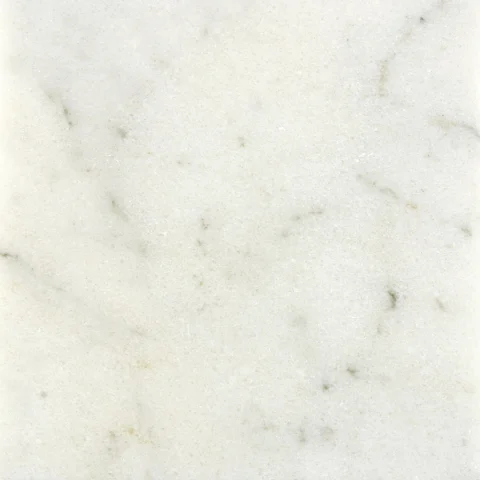
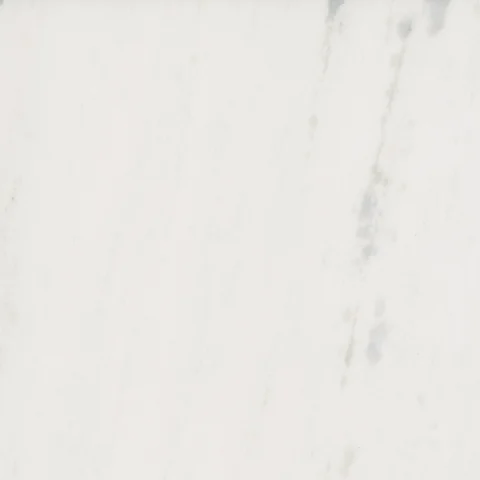
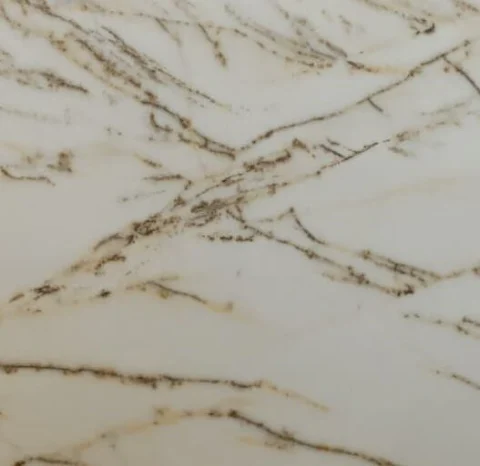
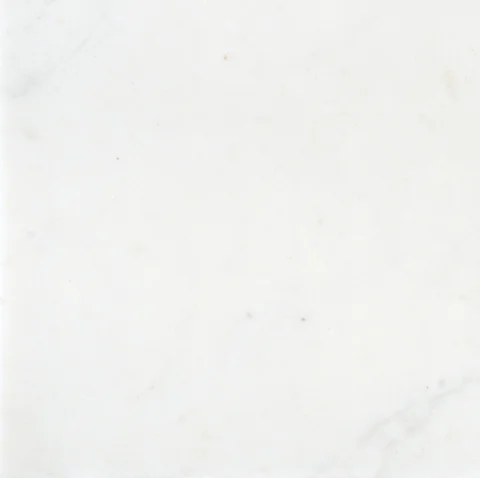
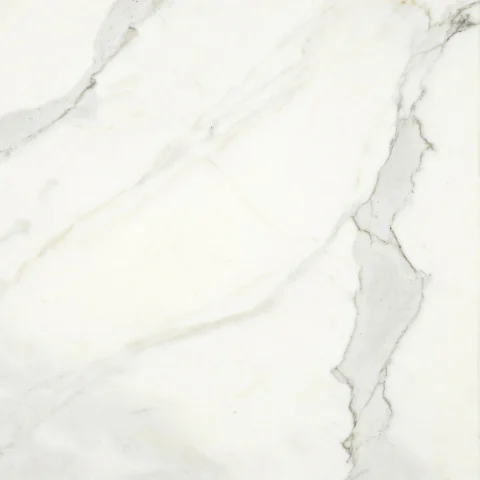
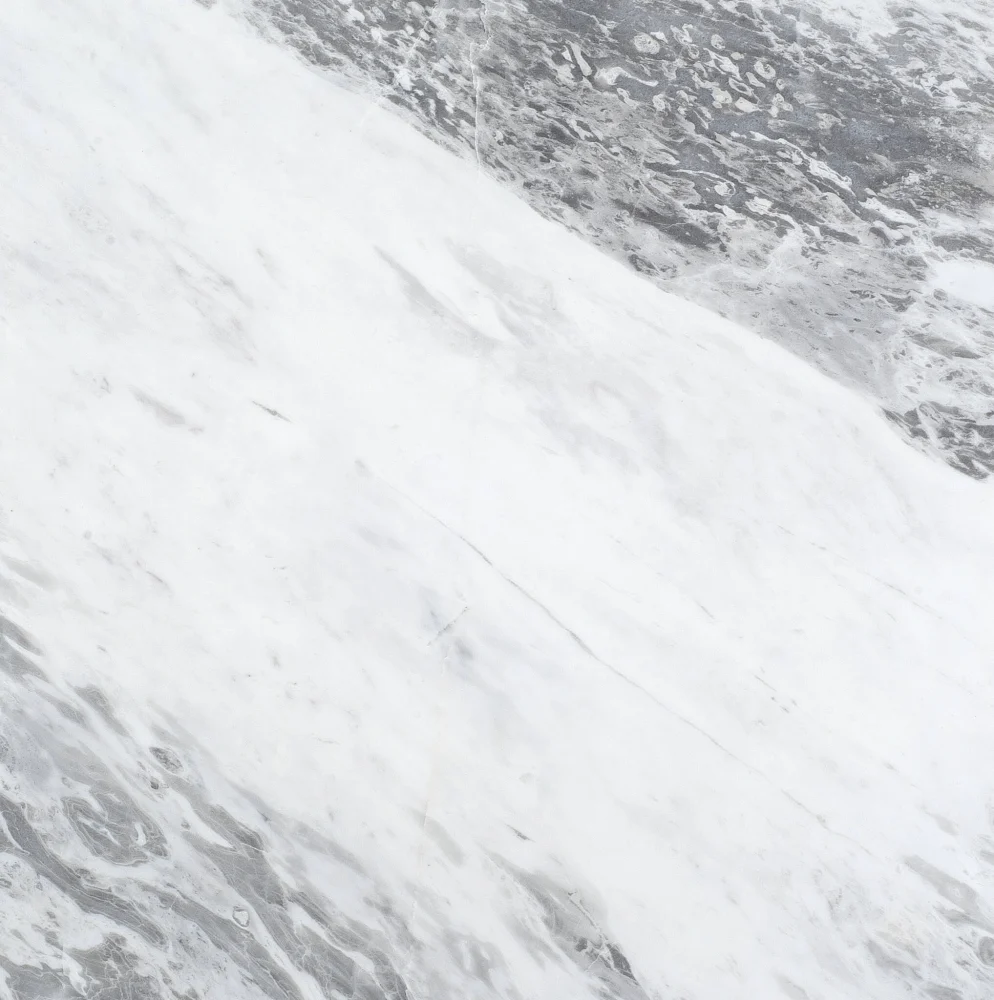
Elba, also found as Elba Gold or Elba White, is a white dolomitic marble quarried in the Kavala area of northern Greece — in the Drama–Kavala unit of the Rhodope Massif, home to some of the best-known Greek white marbles. A bright white background dominates the slab, with light to dark grey wavy veins and streaks winding diagonally across it to add movement and depth, while discreet crystals give it a soft sparkle. Its cool, balanced palette makes it very versatile, pairing harmoniously with wood, metal and neutral tones in classic and contemporary settings alike. As a dolomitic marble it is slightly harder than calcitic marbles (about 3.5–4 on the Mohs scale); for Greek dolomitic marbles, the Hellenic Survey of Geology and Mineral Exploration (HSGME) gives an average density of 2.81 g/cm³, water absorption of 0.4%, compressive strength of 164 MPa and flexural strength of 11.5 MPa. It reacts with acids more slowly than calcitic marbles, but lemon, vinegar and limescale removers will still dull the polish, so periodic sealing is recommended to protect it from moisture and stains. It is mainly supplied polished, for a brilliant finish, or honed for a softer look, while a sandblasted finish suits exterior applications. It is ideal for wall cladding, floors, bathrooms, stairs and decorative features, as well as countertops if properly sealed. With proper care, Elba provides a bright, timeless base for any room.
Why choose Elba
- Greek white marble from Kavala
- Grey wavy veining on bright white
- Dolomitic – slightly harder than calcitic marbles
- Great design versatility
Technical Specifications
| Geological Type | Metamorphic rock – dolomitic marble (Rhodope Massif, Drama–Kavala unit) |
| Country of Origin | Greece |
| Quarry / Region | Kavala, Eastern Macedonia |
| Color & Pattern | Bright white background with light to dark grey wavy veins and streaks |
| Hardness (Mohs) | 3.5–4 (dolomite) |
| Density (g/cm³) | ≈2.81 (average for Greek dolomitic marbles – HSGME; range 2.72–2.84) |
| Water Absorption (%) | ≈0.4 (average for Greek dolomitic marbles – HSGME; range 0.1–1.0) |
| Compressive Strength (MPa) | ≈164 (average for Greek dolomitic marbles – HSGME; range 115–236) |
| Flexural Strength (MPa) | ≈11.5 (average for Greek dolomitic marbles – HSGME; range 4.0–20.1) |
| Frost Resistance | Partly – mainly for interior use; care is needed outdoors where there is frost |
| Acid Sensitivity | Yes – dolomitic marble: reacts more slowly than calcitic marbles, but dulls with acids |
| Recommended Finishes | Polished, Honed (satin/matt), Sandblasted for exteriors |
Common Applications
Frequently Asked Questions
Export & project supply
SKARIS MARBLE supplies Elba to stone importers, fabricators, architects and hotel projects outside Greece. From our facility in Thessaloniki we handle the whole order in-house:
- Slab selection and matching – we grade and match the slabs for colour and veining, so a large order stays uniform across the whole project.
- Cut-to-size and finishing – pieces cut, edged and finished to your drawings, numbered per room or elevation and ready to install.
- Mixed shipments – Greek marbles, granites, porous limestone (porolithos) and quartz surfaces can be combined in one order.
- Export packing – crated and labelled for sea or road freight, ex-works Thessaloniki; delivered terms quoted on request.
Send us your drawings or quantities and we will come back with a quotation and availability.